MORE ON TYRANNY
In my continuing quest to better understand dictators, authoritarians and tyrants, I stumbled on a commentary in SALON (1/15/26) by Heather Digby Parton. She wrote about the current president being defined by many people as authoritarian, and by some as fascist. But she discerned, after observing him for one year, that he displays most traits of a tyrant – the worst kind of leader possible. I want to share with you a few words of wisdom from her, and other thinkers of the past. Read more....
Janet Jeffery
1/25/20262 min read
In my continuing quest to better understand dictators, authoritarians and tyrants, I stumbled on a commentary in SALON (1/15/26) by Heather Digby Parton. She wrote about the current president being defined by many people as authoritarian, and by some as fascist. But she discerned, after observing him for one year, that he displays most traits of a tyrant – the worst kind of leader possible. I want to share with you a few words of wisdom from her, and other thinkers of the past.
I’ll start with Plato from about 400 BC. He defined a tyrant as one who rules for himself rather than the common good. A tyrant, he said, maintains power through fear and violence and repression of citizens – especially those who are ethical and educated, all the while relying on minions and sycophants to carry out his demands.
About 50 years later, maybe around 350 BC, Aristotle said that tyranny was the worst form of government, but he thought rule of law could mitigate excesses and tyranny would not prevail.
Thomas Paine, the 18th-century English/American influencer whose political writings paved the way for the Declaration of Independence, wrote Common Sense in 1776. Paine called King George III tyrannical and saw his reign as irrational, and said rather that a rational government’s purpose is to protect human rights; and that all people are born equal.
Hannah Arnedt was a German American historian and philosopher who in 1960 wrote that true power is collective, cooperative shared action, derived from what we currently call pluralism, thus creating a balance in a democracy. She asserted that domination and violence are its opposite, and her famous phrase “banality of evil” meant to her that ordinary, dull, unoriginal people can do horrible things through thoughtless obeyance of superior authority – such as a tyrant. They simply follow their leader, even a wayward one.
To circle back to Ms. Parton: She concluded in her thoughtful commentary that this president is the ultimate decider. He rules by threats and extortion. If politicians and oligarchs won’t face down this tyrant, who will? She wrote “The real courage will come from ordinary people (those capable of original thought) who stand up to him.”
These thinkers believed that average citizens, like you and me, if we’re brave enough to fight for our rights to pursue life, liberty and happiness, are the honorable ones. We’re the ones capable of doing the right thing in determining how our government is run.
America’s young democracy could die, and we her people are the best hope for saving it.
Janet Jeffery, Gold Beach
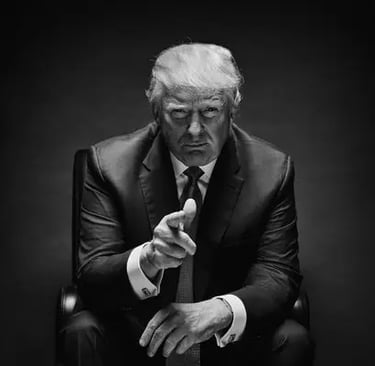
Photograph by Mark Peterson / Redux
MORE ON TYRANNY

(541) 412-3367
© CurryCountyDemocrats, 2025. All rights reserved.
Sign Up For Our Email List.
We will never sell or give your information to any outside person or group!